


.jpg)
.jpg)
.jpg)
.jpg)
.jpg)
.png)


How to hire the right event planner for your next event

Call us



Most hiring mistakes don't happen because someone picked a bad professional. They happen because someone picked the wrong one. A planner whose experience, communication style, or specialization didn't match the event. That mismatch usually surfaces three weeks before the date, when fixing it costs twice as much and takes three times the effort.
Whether you're a senior event manager vetting a production partner for a multi-day conference build, an agency founder looking for a US-based execution partner for an international client, or a marketing lead who needs someone to turn a brand activation concept into something real, the evaluation process starts in the same place.
Know what type of event planner you actually need
Before you start comparing event planning services, get clear on what kind of professional your situation calls for. This single decision filters out most of the noise.
A full-service planner handles everything end-to-end: venue sourcing, vendor management, permitting, design, logistics, and day-of coordination. This is the right fit for large-scale productions: trade show activations at CES or SEMA, multi-day corporate conferences, branded experiences near major industry events. If your event has moving parts that depend on each other, full-service event management prevents the cascade failures that come from gaps in coordination.
A day-of coordinator picks up the timeline and logistics on event day. They don't build the event from scratch. They execute a plan you've already created. This works well for smaller events where the planning is done but on-site management still needs a professional hand.
Then there are specialized planners - professionals who focus on a specific category. A corporate event planner manages stakeholder dynamics, AV requirements, sponsorship integration, and compliance protocols. A wedding planner handles vendor timelines, guest experience, and ceremony logistics. The event planner responsibilities overlap in name, but the skill sets differ significantly.
Two categories deserve their own mention. A virtual event planner manages platform selection, audience engagement tools, and the technical production of fully online events. A hybrid event planner handles both the in-person and virtual experience simultaneously - which is harder than managing either alone, because two different audiences have two different needs at the same time. If your event involves a remote broadcast component, make sure your planner has specific hybrid or virtual experience. General event planning companies often treat virtual as an afterthought, and the audience experience shows it.
Here's a useful filter: if your event involves more than three vendors, more than 100 attendees, any kind of sponsor-facing visibility, or a virtual broadcast component, you likely need a full-service or specialized planner, not a generalist.
What a corporate event planner actually does
Corporate events deserve a separate conversation because the stakes are different. A product launch, a partner summit, a trade show activation at G2E or NAB, a branded hospitality build near FIFA or Formula 1: these carry brand, revenue, and partnership implications that a social event doesn't.
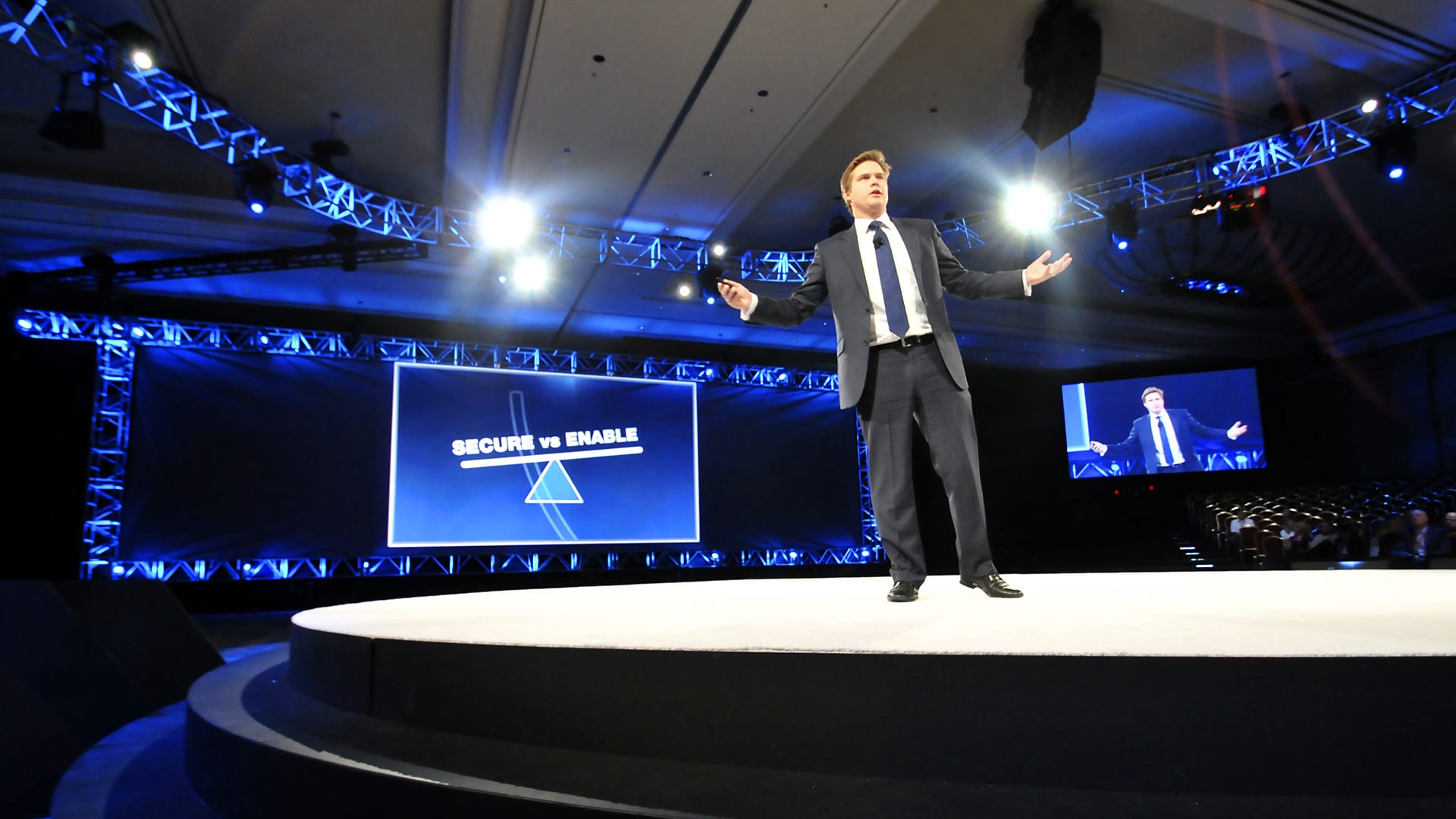
A corporate event planner manages logistics, yes. But they also manage internal politics, cross-functional timelines, sponsor expectations, and executive visibility. They understand that a corporate event is a business tool — not just a live experience. And this extends beyond boardrooms: whether the brand activation is a conference hospitality suite or a block party near a major industry event, the planner needs to think about outcomes, shareable content moments, and sponsor alignment.
If you're evaluating a planning company for a corporate program, ask specifically about their corporate experience.
How many B2B events have they produced? Do they understand permitting requirements and compliance for your venue city?
Can they provide case studies: with specific deliverables like square footage, production scope, and timeline - from events similar to yours?
This is where companies like VOLO Events stand out.
Their documented portfolio includes enterprise brand launches (Galaverse, PacBio, Gala 2.0), multi-year global conference production for Intel/McAfee, and rapid industrial-scale structural deployments for Tesla’s Fremont expansion.

That specificity: named clients, cities, production scope, structural builds - signals hands-on management of complex, high-stakes corporate environments where execution directly impacts brand perception, investor relations, and operational performance.
It reflects real enterprise production leadership, not a generalized “corporate events” service category.
The real issue is this: most event planning companies list "corporate events" on their website but don't actually specialize in them. Specialization means the planner has handled stakeholder alignment, approval chains, branded environments, sponsor deliverables, and local permitting across different cities. Without that depth, you're paying corporate prices for generalist thinking.
For agencies: Choosing an event planner as a production partner
If you're an agency or brand consultancy looking for a US-based production partner to execute on behalf of your client, the evaluation criteria shift. You're not just hiring a vendor. You're choosing an on-the-ground production partner whose performance directly affects your client relationship.
This is common for international agencies managing multi-city brand activations, fan zone builds tied to FIFA or Super Bowl adjacencies, or experiential campaigns that require local permitting, venue coordination, and vendor networks the agency doesn't have in the US market.
The right production partner treats the agency relationship as a partnership, not a pass-through transaction. They respect the brief. They anticipate what you don't know about local regulations, union labor, and venue logistics. rather than waiting for you to ask the right questions. And they communicate with the reliability that lets you manage your client relationship confidently from any time zone.
When vetting, ask whether they've worked with agency partners before. Ask for examples of multi-city execution. Ask how they handle the coordination between the agency's creative vision and the on-site production reality. The planner who understands this dynamic will earn your repeat business across multiple projects.
Five things that actually matter when choosing an event planner
Most guides give you a checklist. Checklists don't help you judge. What follows are five evaluation criteria that separate a competent planner from a great one, and the red flags that tell you to walk away.
Relevant experience over general experience
A planner with 200 events on their resume means nothing if none of those events match your format, scale, or industry. A corporate event planner who's produced major trade show activations at events like G2E, NAB, or NBAA brings a fundamentally different skill set than someone who's managed 200 social gatherings.
Ask for case studies or references from events similar to yours. Relevant experience shapes how a planner anticipates problems, and that anticipation is what you're paying for.
Red flag: A portfolio that's broad but shallow: lots of event types, no depth in any single category.
Budget transparency from the first conversation
Understanding event planner cost structures matters before you commit. A good planner explains their pricing: flat fee, percentage of total event spend, or hourly, and clarifies what's included versus what triggers additional charges.
How much should you expect to pay?
A transparent planner can articulate the variables: event size, number of vendors, production complexity, and timeline. Budget transparency builds trust and prevents the slow-drip surprise charges that erode relationships.
Red flag: Vague pricing like "it depends" with no framework for what it depends on.
Communication style and responsiveness
The way a planner communicates during the sales process predicts how they'll communicate during the event. If replies take three days before you've signed a contract, expect the same cadence when you're two weeks out and need answers fast.
Ask:
What does your update cadence look like?
Who is my day-to-day contact?
How do you handle urgent changes?
Strong communication reduces the operational friction that derails timelines. This matters even more for agency partners managing projects from a different time zone. If the planner isn't proactive, the agency ends up managing the vendor instead of the client.
Red flag: Slow replies, generic status updates, or no clear point of contact.
Vendor network and negotiation power
Established planners carry vendor relationships that took years to build. Those relationships save you time, reduce cost, and give you access to preferred availability windows the general public doesn't get.
This matters especially for large industry events. A planner experienced with CES-scale logistics already has working relationships with AV companies, staging crews, and venue contacts in Las Vegas.
An event planner near you with strong local vendor connections will outperform a remote planner with a bigger name every time. Because event management is ultimately a relationships business.
Red flag: A planner who outsources all vendor management with no oversight or existing relationships.
The questions worth asking before you hire
The evaluation criteria above give you a framework. These questions put that framework into practice.
Start with relevance. "Can you walk me through an event you managed that's similar to mine - same scale, same industry, same type of audience?" A strong planner will reference concrete details: square footage, production scope, the specific logistical challenge they solved. A weak one will speak in generalities.
Move to money. "How do you structure your pricing, and what's typically not included?" This separates planners who've thought through their economics from those making it up as they go.
Test communication. "What does communication look like between now and event day? How often do I hear from you, and in what format?" The answer tells you whether this person manages proactively or reactively.
Ask about failure. "Tell me about a time something went wrong during an event. What did you do?" Planners who've managed high-pressure events like SEMA or NBAA - where production timelines are unforgiving and sponsor expectations are high - develop a reflex for fast, quiet problem-solving that keeps the audience unaware anything went wrong.
Ask about coverage. "What does your insurance look like, and what liability coverage do you carry?" Professional event planner insurance protects you if something goes wrong - and any serious planning company carries it. If the planner hesitates, that tells you something about how they manage risk.
Finally, ask about tools. "What event planning software or project management systems do you use to keep things on track?" Planners who rely on organized systems deliver more consistent results than those running everything through email threads and memory.
When you might not need one
Not every event requires a professional planner. A team lunch for 15 people, a backyard gathering, a simple internal meeting. These don't carry enough logistical risk to justify the cost.
A day-of event coordinator might be the better middle ground for mid-scale events. You handle the planning. They handle execution on the day itself. Lower cost, still structured. The difference between a planner and an event coordinator is scope: planners build from concept to completion, coordinators execute an existing plan.
But here's the tipping point: if the event involves multiple vendors, a timeline measured in hours rather than rough blocks, a large guest count, or any form of public or sponsor-facing visibility, a professional planner pays for itself in risk reduction alone. For most corporate and industry events, planning isn't a luxury: it's a necessity.
What makes a bad event planner
Red flags are easier to spot when you know the pattern.
A generic proposal is the first warning sign. If an event planning company sends you a proposal that could apply to any event. No specific references to your goals, your audience, your timeline - they haven't done the thinking.
Watch for reluctance to share references. Any experienced professional has past clients willing to vouch for them. If they dodge this request, ask yourself why.
Be cautious of portfolios that are all photos and no substance. Beautiful images don't tell you whether the event came in on budget, whether the timeline held, or whether the client would hire them again.
And if the contract is vague, or there's no contract at all, end the conversation. Scope, deliverables, payment terms, cancellation policies: these protect both sides.
Making the right choice
The right event planner remove the burden of hundreds of small decisions that accumulate under pressure: vendor coordination, permitting, timeline adjustments, contingency plans, on-site pivots. Whether you need a corporate event planner for a trade show build, a hybrid specialist for a dual-audience conference, or a production partner for a multi-city activation, the evaluation process is the same.
The way a planner communicates, structures pricing, references past work, and responds to hard questions during the hiring process mirrors exactly how they'll perform when the event is live.
The best event planner for you is the one who makes the entire planning process feel managed.
Related projects

.jpeg)


Event planner cost varies by pricing model. Most charge either a flat fee, a percentage of total event spend (typically 15–20%) plus a management fee, or an hourly rate. The right structure depends on your event's scale and complexity. Corporate events, trade show builds, and multi-city activations cost more due to production scope and longer planning timelines.

Prioritize local vendor relationships, venue familiarity, and relevant experience in your event type. A local planner with strong connections in your city will often outperform a national firm without that network. Check for verifiable case studies, event planner insurance, and clear communication during the proposal process.
If the event involves multiple stakeholders, sponsor visibility, vendor coordination, or brand-facing presentations, yes. A corporate event planner manages the political and logistical dynamics that generalists often miss. Industry events like CES, NAB, or G2E are prime examples where specialized event management directly impacts outcomes.
The most important skills are clear communication, budget management, vendor negotiation, and problem-solving under pressure. Technical skills like proficiency with event planning software matter too, but judgment and composure under stress matter more. A certification like CMP can also signal professional commitment.
A planner handles the full scope - concept, design, vendor sourcing, budgeting, permitting, and logistics from start to finish. An event coordinator typically manages day-of execution using a plan that's already been built. The roles overlap, but the scope and cost differ significantly.

Let's talk
We'll be in touch over the next 48 hours

